Method
How it works.
- 01
The survey
The roof, the slope, the plot, the zoning, the commune. We measure, and we read the PLU (the local urban plan), before telling you what has to be declared and what does not.
- 02
The quote
A volume, a material, a price excluding VAT. And the grant you are actually entitled to — main residence or not, Cannes or CASA.
- 03
The installation
A trench, a tank, the connections, the declarations that are required. And the garden closed up again behind us.
Estimate the collectable volume
—
An estimate — the site survey does the rest.
Method: horizontal footprint of the connected roof (length × width) × roof coefficient × filter coefficient 0.9 × reference annual rainfall, 881 mm in Cannes (Météo-France, 1991–2020). Theoretical maximum: real-world losses are not deducted. Mougins and Valbonne: no station found, values may differ.
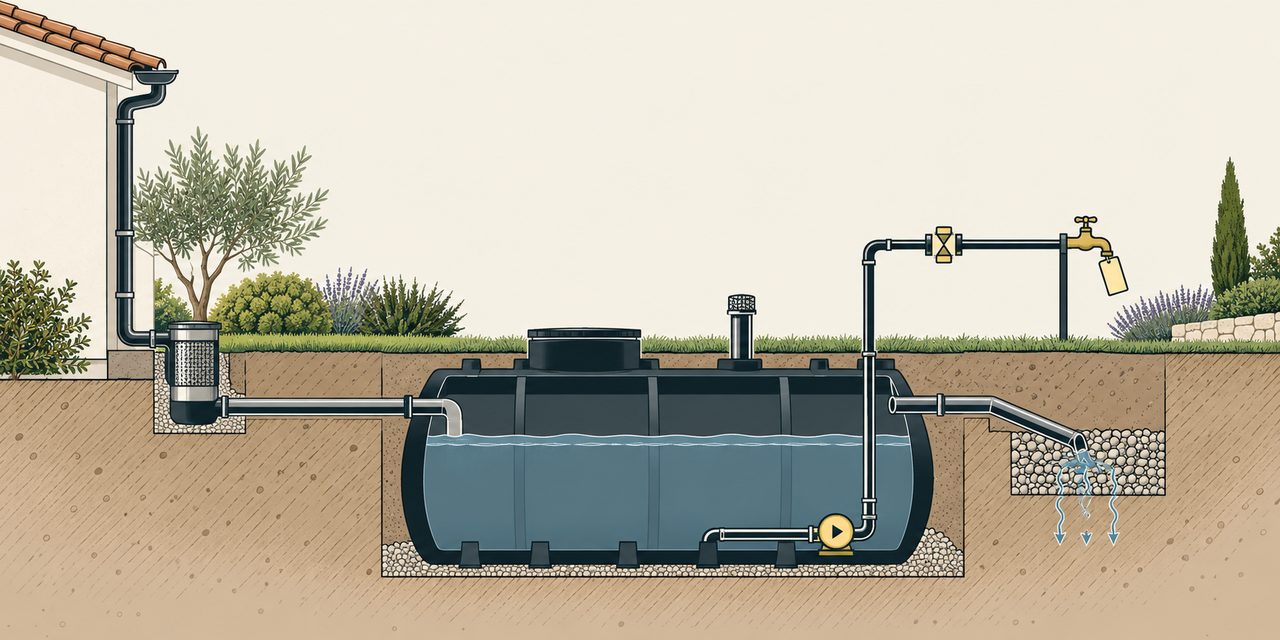
The filtration chain
- 01
Gutter
- 02
Filter ≤ 1 mm
- 03
Opaque buried tank
- 04
Pump
- 05
Air-gap disconnection
- 06
Tap marked “eau non potable” (non-drinking water)
Gutters: materials, compatible roofs, maintenance and rules, with the sources. See the Gutters page
Expected maintenance
- Regular visual checks for leaks
- Cleaning the filter and the vent mesh
- Checking the disconnection (air gap)
- For greywater: quality tests, on the schedule declared to the prefect